0
+234 9166038000
34 Ajanaku St, Opebi.
Ouida Lagos
  • Home
  • Shop
    • Café
    • Books
      • Fiction
        • Fantasy
        • Romance
        • Short Story
        • Literary Fiction
        • Science
        • Young Adult Fiction
        • Thriller
      • Non-Fiction
        • History
        • Science
        • Business
        • Biography
        • Memoir
        • Poetry
        • Self-Help
        • Reference
        • Cultural History
      • Other
        • Children’s Books
        • Ouida Books
    • Merchandise
    • Ouida Lagos Giftcard
  • Spaces
    • Workspace
    • The Sunroom
    • Meeting Rooms
    • Bookshop
  • Events
    • Litty December 2025
      • Event & Tickets
    • Ouida Open Mic
    • Ìsèdá
    • Think Free
  • Ouida Community
  • Ouida Books
    • About Ouida Books
    • Submissions Guidelines
    • Authors
    • Books
  • News
    • Blog
    • Artist Spotlight
  • About Us
    • Contact Us
0
Ouida Lagos

webmaster

11May

Louisa Onome. Author of Pride and Joy

May 11, 2025 webmaster Artist Spotlight 74

Q&A with Louisa Onome

1. Congratulations on the West African Publication of your novel Pride and Joy. What are your hopes for the reception of the novel on the African continent?
Louisa Onome: Thank you! It’s a huge honour to have Pride And Joy published in West Africa, and my hope is that the story is able to connect with readers who see themselves in the pages. Also, I hope even amidst the tears in this one, you find moments to smile as well.


2. The phrase ‘Pride and Joy,’ is normally employed to express admiration and appreciation. Given the plot, did you choose this title to throw readers off?
A little bit, yes! It was nice having a phrase that was so familiar to people as the title, but I also loved that there can be multiple meanings to this one. I’ll let everyone decide what they feel the title means to them!


3. In the novel, a cow plays an important role in moving the story forward. Why did you choose a cow?
It was sort of arbitrary, but I was thinking about the area that the Okafor’s party was held in, and there’s so much farmland around. You can drive for a while before you see a house — but you will likely see fields of cows, sheep, or even horses. The idea of a runaway cow was so funny to me, which is why I settled on that animal.


4. The live streaming of Mama Mary’s anticipated resurrection results in the public embarrassment and the exposure of family secrets. Can you expand on your thoughts on exploiting private family moments with the aim of gaining sympathy or validation from the public?
I know it sounds hypocritical, especially with the scenes in my book, but I’m definitely against this kind of exploitation. Family matters are always complicated, and to have that on full display for the sake of sympathy or validation feels… icky. It’s never a good thing, in my opinion, because we all need time to ourselves to process and think about difficult things. There are some things the public shouldn’t have access to.


5. Joy feels inadequate due to her dislocation from her Nigerian roots and the loss of a close family member. As a writer who resides outside Nigeria, what are some of the ways in which you nurture your cultural link/ties to your country of origin?
I feel very fortunate to have grown up inside and around a Nigerian community here in Toronto, and to have visited my dad’s town in Delta State, but the main way I maintain my cultural ties is through food. Food is culture, the same way language or mannerisms are, and so cooking and maintaining my knowledge of traditional Nigerian food is important to me.


6. Aunty Nancy is the definition of ‘delulu’. A lot of people give in to delusions to make sense of their lives and assert control. Is the acceptance of fanatical beliefs making it more difficult to distinguish between religious fervour and mental illness?
This is such a good question! I hadn’t given it much thought, but I do think it’s interesting how fanaticism tends to be more acceptable if it’s seen through the eyes of religious fervour. That’s likely the truth in Aunty Nancy’s case. If anyone else had said they’d received a premonition in broad daylight, it wouldn’t be looked upon too kindly — but under the guise of a religious prophecy, it’s completely fine, right? I don’t think anybody would dare refer to it as stress-related mental illness, though there’s always a chance it could be.


7. At the infamous resurrection vigil, Aunty Nancy first invites Pastor Lazarus and then she welcomes Jaja, a traditional spiritualist. Is syncretism common in typical Nigerian households?
In some ways, it feels common and in other ways, it doesn’t. I know for me, the understanding of cultural or native traditions was always there, because my parents found it important to teach us. I personally love that a whole lot about my culture because it reaffirms that spirituality is culture (once again, the same way food, language, or mannerisms are), and it’s embedded in us, no matter our religious affiliation.


8. Nnenna, the self-proclaimed First Lady of the New Apostles in Pentecostal Glory African Church is constantly put down by her husband. Yet it’s difficult to sympathise because she is judgemental and deliberately provocative. Is she this way because she has not excavated her personal traumas?
Definitely. I have a lot of empathy for Nnenna and the Nnennas of the world, and it goes back to that old adage, “Hurt people hurt people”. The same can absolutely be said about her husband, but in her case, she has been belittled so much that she’s unaware what it’s done to her. I think it’s important for every single person to take time and evaluate our behaviours, thoughts, and judgments. We may find that what we judge in others is exactly the sort of thing we wish we could be seen for.


9. In your novel you employ humour masterfully. Was this to temper the intensity of the story or are you naturally funny?
Thank you! Partially, yes — but I think it’s mostly because I tend to look at everything with a hint of unseriousness. What do people say — “if you don’t laugh, you’ll cry”? I think crying is just fine and, if I’m being honest, I cry fairly often, but I love to laugh and that mindset has sort of helped me see everything with more levity.


10. Are you working on anything new, what should we expect from you in the near future?
I have a graphic novel for young adults called Revenge Arc that will be out in 2027! I’m really excited about that one and am excited for readers to check it out.

Read more
11May

Nnamdi Ehirim. Author of The Brevity of Beautiful Things

May 11, 2025 webmaster Artist Spotlight 62

Q&A with Nnamdi Ehirim

1. Congratulations on the publication of your second novel, The Brevity of Beautiful Things. Tell us about the title and why you chose it.
Nnamdi Ehirim: Thank you. With titles, I try to go with something that would capture readers’ attention as well as the essence of the story being told. This particular story is really about my exploration of the fleeting nature of friendships, the fleeting nature of happiness in friendships that last for a long time and the other emotions that keep friendships going long after happiness has left.


2. Your debut novel Prince of Monkeys was a coming-of-age story. How would you say your writing has evolved?
I am a lot less selfish with my writing. While writing my first novel, I was my primary audience and wrote exactly what I wanted to read at that moment. With my second novel, I am a bit more considerate of my readers and what I think they want to read. I am also less interested in the philosophy of living and more consumed by the drama in relationships.


3. The novel opens with a character who is best described as a hopeless romantic. Why did you choose to start your novel with this character?
I started the story with who it came to me with and introduced the other characters as they arrived. At the time, I had not written any fiction in about two years but I found myself rationalising the loss and heartbreak from a failed relationship and that manifested itself in a character who began rationalising loss and heartbreak in a very extreme way—denial.


4. “The paradox of loving is that we learn to love perfectly from the people who are imperfect for us”. How true is this in modern-day relationships where the parties are less forgiving and more intentional about the kind of people they want to be with?
I believe the more we love and experience people in close relationships, the more we get a clearer filter of what we want and don’t want from love. So naturally, with each close relationship that fails or is sustained, we are learning to love the next person better.


5. In the novel, we are introduced to Ufedo and Iman—two unpredictable female characters who themselves are on an emotional rollercoaster. What does it take for a man to capture female voices so accurately?
I observe women who I find interesting. I also try to make an effort to listen to women. When I’m writing stories, I am very interested in listening to similar experiences of women around me. In this story, this included things like asking female friends to speak to me about when they were first conscious of their desire for others and others’ desire for them, how they dealt with loss of intimacy in friendships, how they dealt with parental infidelity and all the other points of conflict that we see in the story.


6. Although the novel is set in different times, you take us back to the complexities of boarding school. Did you draw inspiration from your own experiences or did you have to research to create such a vivid and relatable portrayal of this setting?
I went to boarding school and had a relatively good experience. A number of my close friends today are people I met in boarding school. So the concept of boarding school friendships evolving into proper adult relationships that become complex and require more thoughtfulness to hold on to was drawn from personal feelings. But the actual details of boarding school experience in this book was drawn from a wide range of stories I have heard from people I know who went to all sorts of boarding schools.


7. Some parents send their children to boarding schools because they believe their children will become better behaved and more disciplined. Is this true of the boarding school experience in Nigeria?
I believe this is true at the core of it. There was a generation of Nigerian parents that believed outsourcing parenting to the perceived structure of a boarding school delivered better results. I think this is true for some children but not for most because the parental oversight in most boarding schools is too impersonal.


8. Each chapter is driven by a character’s story. Did you think this will enhance the readers enjoyment of the story?
This was what the story demanded. I wanted to show how the same events in our relationships can have different valid perspectives depending on who is looking at it, how expectations can be imbalanced and how miscommunication can take root. After this, I hoped and prayed that the outcome would enhance the reader’s enjoyment of the story.


9. You capture camaraderie so well, case in point, Faramade, Kamara, Julius and Senior Aluya. Do boys thrive better in same sex friendship groups?
I think time, proximity and open communication are the key ingredients to a thriving friend group regardless of the genders involved.


10. Some people have said they can imagine this story on the big screen, have you thought about that as well?
Naturally. From a very selfish position, I am always eager to see how people receive and interpret my stories, so seeing a filmmaker adapt my telling of the story into theirs would be an incredible privilege.

Read more
17Mar

Launching Get Rid of your Phone Mummy

March 17, 2025 webmaster News 75

Tobe and her best friend fantasise about having their mothers to themselves for a few hours…

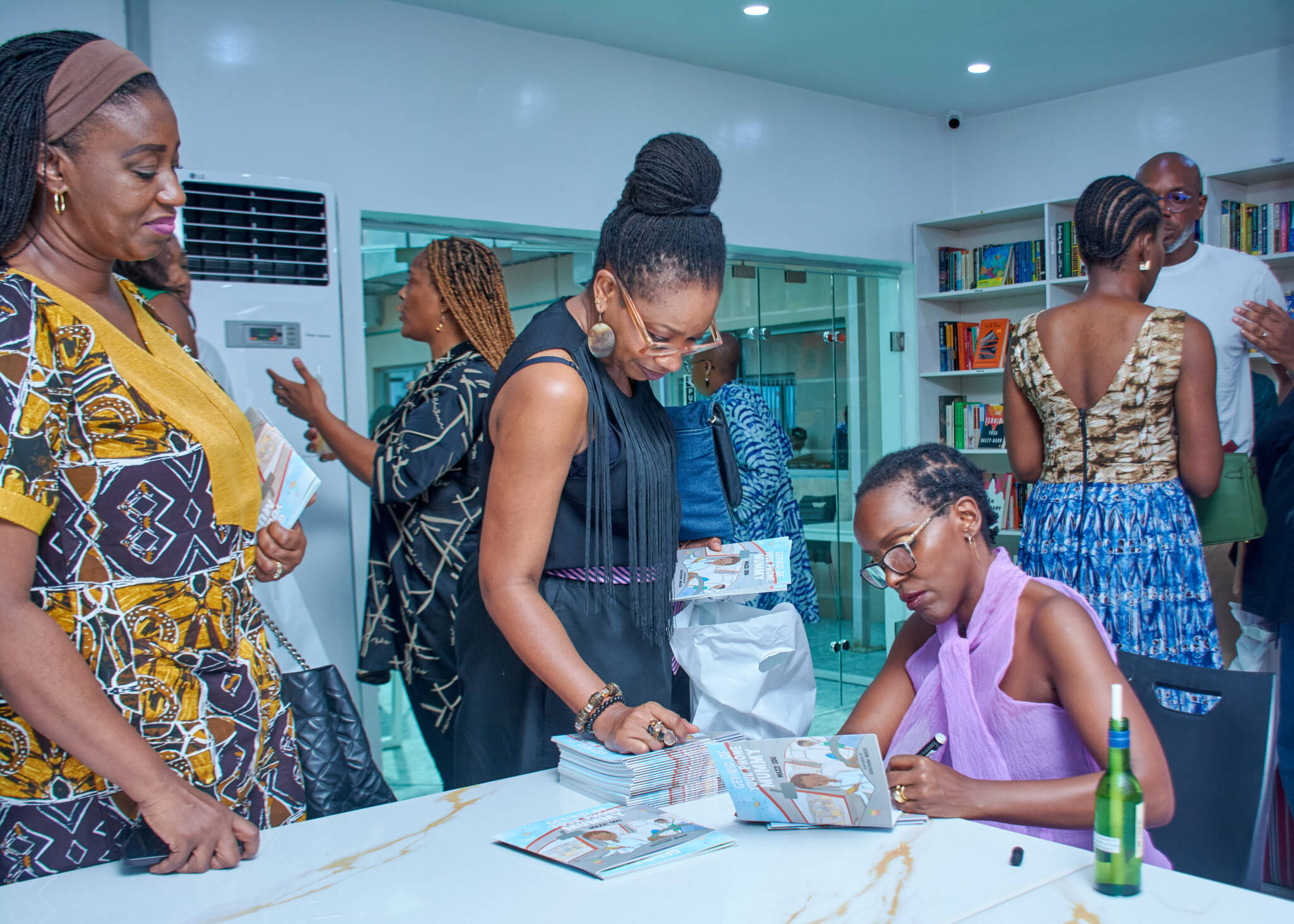
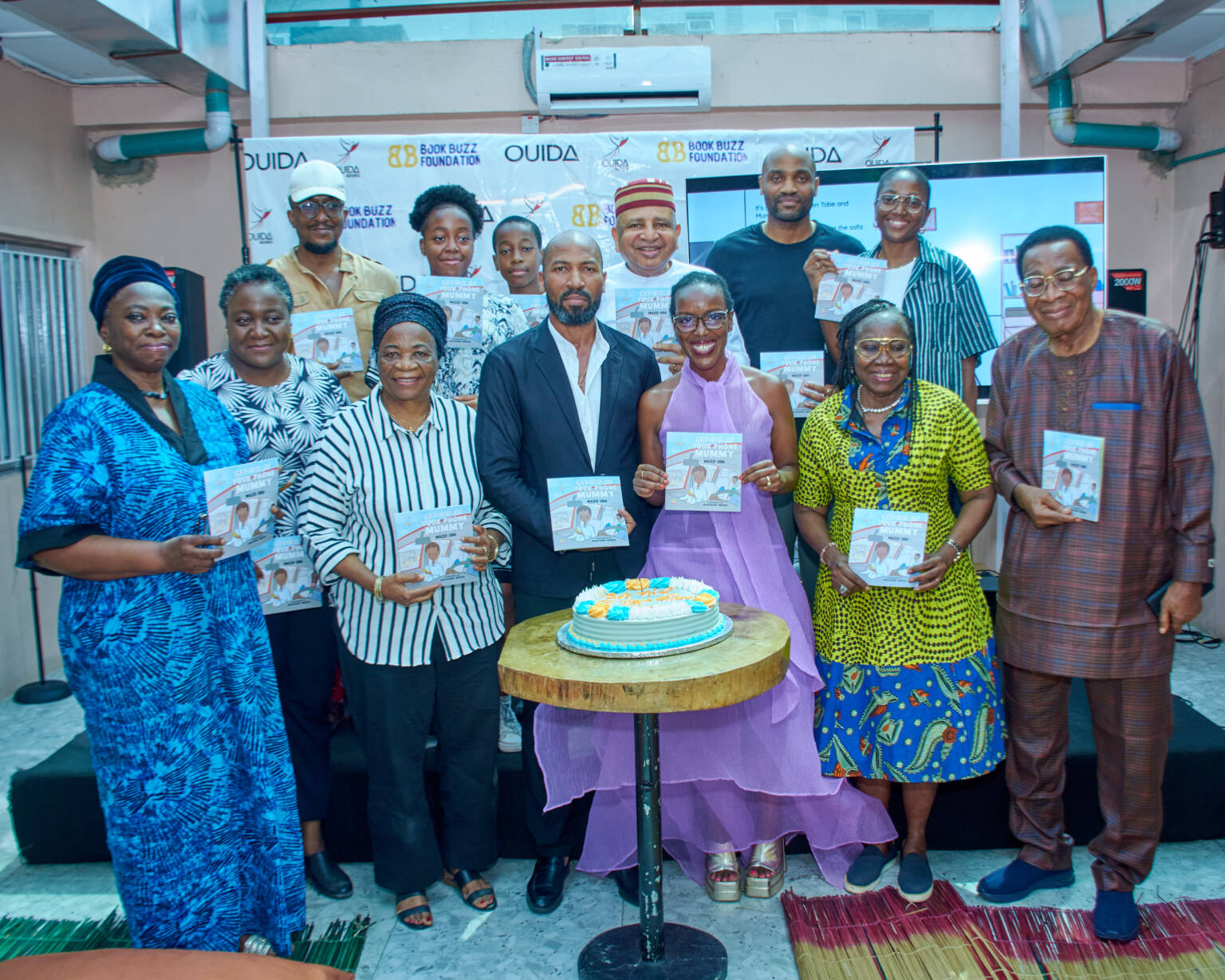
Ouida Books held a brilliant book launch event for Mazzi Odu’s debut book, Get Rid of Your Phone Mummy, on the 8th of March 2025. This picture book, published by the Tanja Imprint of Ouida Books, is their third published title in 2025, following The Brevity of Beautiful Things and Mrs. Kuti, both released in January.

Ms Sharon Adeoye-Ajanlekoko, one of the editors at the publishing house, kicked off the event by addressing a crowd of a hundred guests, including the author’s family members.

This children’s picture book comes courtesy of Lola Shoneyin’s Bookstorm initiative—a comprehensive and detailed plan to revolutionise the children’s book industry by upskilling and empowering authors, illustrators, editors, graphic designers and other professionals required to boost output within the publishing ecosystem. One of their goals is to publish one hundred children’s books before the end of 2027. Judging from the quality of the story and Adulphina Imuede’s strikingly beautiful illustrations, they have made a great start.

The story centres around a young girl named Tobe who feels ignored by her mother, who spends too much time on the phone. Exasperated, Tobe and her best friend fantasise about having their mothers to themselves for a few hours. As if in response to the frustrations of innocent children, the fierce, magical Uduak appears, looking like a glamorous Efik version of Tinkerbell.

During the book chat with Lola Shoneyin, Mazzi Odu provided the backstory of the book. A power blackout denied her access to books and her tablets, forcing her to make up a bedtime story for her daughter, Tobe, who the book’s protagonist is named after. The author shared how she reads frequently with her daughter and how, when it comes to telling stories, her daughter is her “first reader”.

Mazzi outlined her motivation for finding a publisher. Put bluntly, she asserted that parents (herself included) spend a lot of time on their phones. To illustrate her point, she asked the children in attendance if they thought their moms spent too long working on their devices. The call-out struck most of the mothers and fathers in attendance, as all the children raised their hands.

Without being preachy, Get Rid of Your Phone Mummy presents a message we can all learn from. If parents continue giving attention to those digital rectangles, it could put an emotional gulf between them and their children, especially when those children grow up feeling deprioritised. As one of the guests observed, if not curbed, this trend could result in children deprioritising their parents in favour of electronic devices.

During the Q&A session, Mazzi Odu confirmed that there were more books in the pipeline.

The event ended on a celebratory note with photographs with family and friends, a book signing, and tasty refreshments. The publishers and the author all smiled — and for good reason.

It was a memorable book launch for a spectacular book.

Read more
30Mar

Butter Honey Pig Bread Review

March 30, 2023 webmaster Book Reviews, News 34

This review was done by Nnaemeka Nnam for BUTTER HONEY PIG BREAD

“I read everything from cover to cover, and sometimes I write my thoughts( review) while I’m reading. This helps me stay grounded and remember the unique aspects of the book. However, with this book, I didn’t do that, mostly because I finished almost all of it in one day. Nonetheless, I’m going to try (though it might be difficult because i loved so many things) to highlight the things I loved about this book. Butter Honey Pig Bread tells the interwoven stories of twin sisters, Taiye and Kehinde. Their mother, Kambirinachi is an Ọgbanje who wonders if her unnatural choice to stay alive to love her human family was the best decision.


Firstly, the writer’s voice was very original, conveying strong language control. I particularly loved how she conveyed the different personalities of her characters when she switched POVs. This is particularly important because the singular “We” narrates the story, yet it feels very different when it switches to Taiye or Kambirinachi.


Secondly, this book spans multiple generations, three to be precise, and I liked how the story unfolded concurrently. Although you know you are in the past, it feels like the present because the actions of the past are intertwined with the present.
Every time the book switched timelines, I felt a sharp pain in my chest because, like most people, I like familiarity.

READ THE FULL REVIEW HERE

Read more
28Feb

Preview ‘Daughter in Exile’ Here

February 28, 2023 webmaster News 35

We are delighted to introduce you to the West Africa edition of DAUGHTER IN EXILE. 


Bisi Adjapon, the acclaimed author of The Teller of Secrets returns with a gut-wrenching, yet heartwarming, story about a young Ghanaian woman’s struggle to make a life in the US, and the challenges she must overcome.


Lola is twenty-one, and her life in Senegal couldn’t be better. An aspiring writer and university graduate, she has a great job, a nice apartment, a vibrant social life, and a future filled with possibility. But fate disrupts her world when she falls for Armand, an American Marine stationed at the U.S. Embassy. Her mother, a high court judge in Ghana, disapproves of her choice, but nothing will stop Lola from boarding a plane for Armand and America.


That fateful flight is only the beginning of an extraordinary journey; she has traded her carefree existence in Senegal for the perilous position of an undocumented immigrant in 1990s America.


Lola encounters adversity that would crush a less-determined woman. Her fate hangs on whether or not she’ll grow in courage to forge a different life from one she’d imagined, whether she’ll succeed in putting herself and family together again. 


Daughter in Exile is a hope-filled story about mother love, resilience, and unyielding strength.

READ PREVIEW HERE

This book will be available in store at a retail price of 5,500 naira from 30 March 2023. Our preorder link is here for you to get a firsthand look at this book once it is published. We look forward to receiving your order.

Read more

Stay informed!

Subscribe to our monthly newsletter

ouid

Welcome to Ouida, Lagos—your gateway to one of Africa’s most dynamic cultural hubs. Our mission is to celebrate and promote cultural expression so whether you’re a newbie, a creative, or just curious about the city’s culture scene, we offer a unique and memorable taste of the vibrant energy that defines Lagos.

Quick Links
  • About Us
  • Bookshop
  • Café
  • Ouida Community
  • Spaces
Contact us

Ouida
34 Ajanaku street
Off Salvation Road,
Opebi, Lagos Nigeria


Phone Number
+234 9166038000

  • About Us
  • Events
  • Contact Us

© 2026 Ouida Lagos All Righs Reserved